 POWER SYSTEMS |
 NEWS NEWS  EVENTS EVENTS |
 BOOKS BOOKS  BLOG BLOG |
 UNIVERSITIES UNIVERSITIES  NIKOLA TESLA NIKOLA TESLA |
 LINKS LINKS  CONTACT CONTACT |
 |
POWER SYSTEMS |
 |
| BOOKS
EEE
< PREVIOUS EEE
NEXT > S.K. Salman - Introduction to the Smart Grid O. Elgerd - Electric Power Engineering J.C. Das - Transients in Electrical Systems: Analysis, Recognition, and Mitigation S.H. Horowitz - Power System Relaying A. Moreno-Munoz - Large Scale Grid Integration of Renewable Energy Sources B. M. Weedy - Electric Power Systems N. Jenkins - Renewable Energy Engineering A.R. Messina - Wide Area Monitoring of Interconnected Power Systems J. Northcote-Green - Control and Automation of Electrical Power Distribution Systems S. Vadari - Electric System Operations: Evolving to the Modern Grid
< PREVIOUS EEEEEE
NEXT >
EEEEEEEE
Showing 161 to 170 from 247 books In order to extend the content of this website, we invite you to contribute any information, including news, events, books, blog posts, universities, links, etc., you find helpful about power system engineering. |
S.H. Horowitz - Power System Relaying Power System Relaying 4th Edition by Stanley H. Horowitz (Author), Arun G. Phadke (Author), James K. Niemira (Contributor) Hardcover: 398 pages Publisher: Wiley; 4 edition (January 28, 2014) Language: English ISBN-10: 1118662008 ISBN-13: 978-1118662007 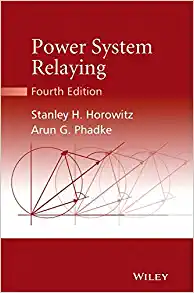 With emphasis on power system protection from the network operator perspective, this classic textbook explains the fundamentals of relaying and power system phenomena including stability, protection and reliability. The fourth edition brings coverage up-to-date with important advancements in protective relaying due to significant changes in the conventional electric power system that will integrate renewable forms of energy and, in some countries, adoption of the Smart Grid initiative. New features of the Fourth Edition include: an entirely new chapter on protection considerations for renewable energy sources, looking at grid interconnection techniques, codes, protection considerations and practices. new concepts in power system protection such as Wide Area Measurement Systems (WAMS) and system integrity protection (SIPS) -how to use WAMS for protection, and SIPS and control with WAMS. phasor measurement units (PMU), transmission line current differential, high voltage dead tank circuit breakers, and relays for multi-terminal lines. revisions to the Bus Protection Guide IEEE C37.234 (2009) and to the sections on additional protective requirements and restoration. Used by universities and industry courses throughout the world, Power System Relaying is an essential text for graduate students in electric power engineering and a reference for practising relay and protection engineers who want to be kept up to date with the latest advances in the industry. About the Author Stanley H. Horowitz, Retired Consulting Engineer, American Electric Power, BSEE City College of New York. Mr Horowitz worked at American Electric Power Service Corp. from 1950 to 1989, serving as head of the System Protection Section and assistant head of the Electrical Engineering Division and Consulting Electrical Engineer.?He was a lecturer at Columbia University Graduate School and a guest lecturer at the Universities of Wisconsin, Marquette, Auburn, Virginia Polytechnic Institute, Rensselaer Polytechnic Institute, Massachusetts Institute of Technology, Lund University and Grenoble University. He is a Life Fellow of the IEEE and served as chairman of the IEEE/PES Power System Relaying Committee from 1975-1978. In 1995 he was elected to the National Academy of Engineering and in 2008 was awarded the PES Life Achievement Award. Mr Horowitz was chairman of Study Committee 34-Protection and Control of the International Conference on Large High Voltage Electric Systems (CIGRE) from 1980-1986. In 1997 he was awarded the CIGRE Attwood Associates Award. He has co-authored a textbook and authored over 24 technical papers; he was also editor-in-chief of the IEEE Power Engineering Society magazine "Computer Applications in Power" until 2002. Arun G. Phadke, Retired Research University Distinguished Professor, Virginia Technical University, Life Fellow-IEEE, member National Academy of Engineering 

|